
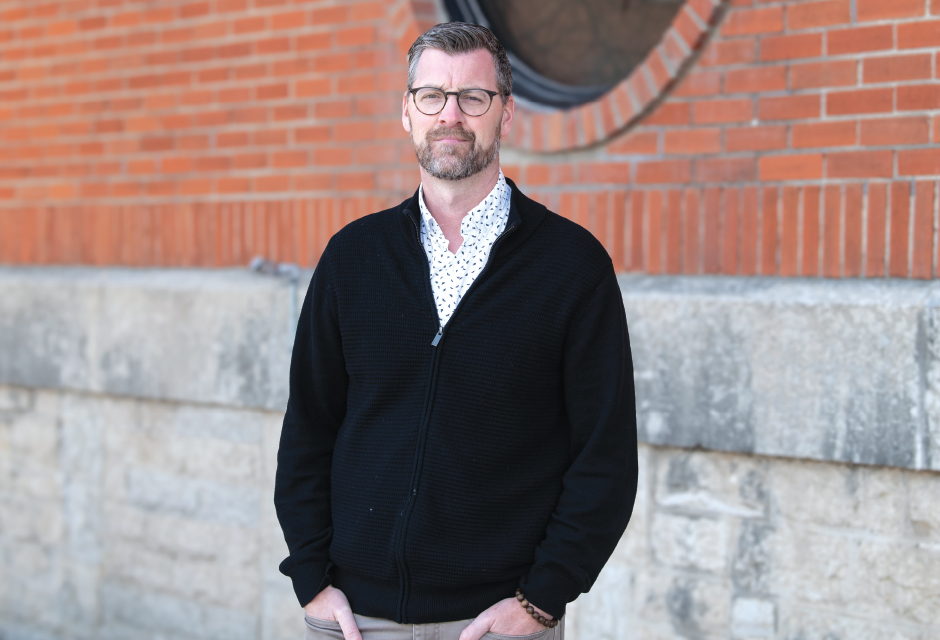
Robert George believes supporting students starts with relationships. As a school psychologist in the Louis Riel School Division, he works alongside teachers and families to help students succeed academically, socially and emotionally.
“What drew me to the work is the chance to support real change at such an important point in students’ lives,” George said. “You’re not just stepping in briefly, you’re working alongside students and families over time.”
George’s role is split between supporting the division’s school classroom support team that consists of clinicians and specialists such as speech-language pathologists, social workers and occupational therapists, and working directly in schools.
“What we do is support different needs in schools and what those look like,” he said.
With more than two decades of experience as a bilingual school psychologist in public and private school systems, George said no two days look the same.
“The typical day for me is that it’s atypical,” he said. “There isn’t really a day that’s like the other, but what is common is that I’m working alongside teachers and students to support them in the best way possible along their educational journey.”
George said student mental health challenges have become increasingly complex in recent years.
“Research indicates increased anxiety, especially around performance and social situations, alongside disengagement and reduced coping capacity,” he said. “There’s also more impact from identity-related stress and ongoing issues like cyberbullying. It’s not just more students struggling, it’s that the challenges themselves have become more layered.”
He encourages teachers to pay attention to changes in student behaviour and well-being.
“There are three main areas teachers can look for: emotional distress, behavioural change and functional decline,” George said. “That might look like increased anxiety, withdrawal or changes in learning or attendance. What’s most important is noticing a shift from a student’s usual pattern, especially when those areas overlap.”
George said small, consistent actions can make a significant difference in the classroom.
“Three things teachers can do are connect, normalize and support,” he said. “Connect through consistent low-pressure relationships, normalize mental health to reduce stigma, and support with simple strategies like check-ins and regulation tools.”
He added that mental health should be viewed the same way as physical health.
“It’s something you maintain every day,” George said. “Mental health isn’t separate from learning. It supports it.”
Collaboration is another key part of George’s work.
“Teachers know their students so well and care deeply about supporting them,” he said. “Being able to work together, share insights and problem-solve as a team makes a real difference.”
In 2023, George received the Manitoba Association of School Psychologists Award of Excellence for his work reducing barriers and improving outcomes for students. He said much of that work focused on advocating for learning disability screening and supporting inclusive practices through technology.
“I’m always looking for innovative, collaborative and data-driven ways to reduce barriers, promote inclusion and support students to fulfil their potential,” he said.
Despite the demands of a high caseload, George remains motivated by the impact of the work.
“You’re always going to be in constant motion trying to respond to needs,” he said. “But that opportunity to support real change in students’ lives – that’s the lasting impact.”
The Manitoba Teachers’ Society represents more than 400 school clinicians across the province.