
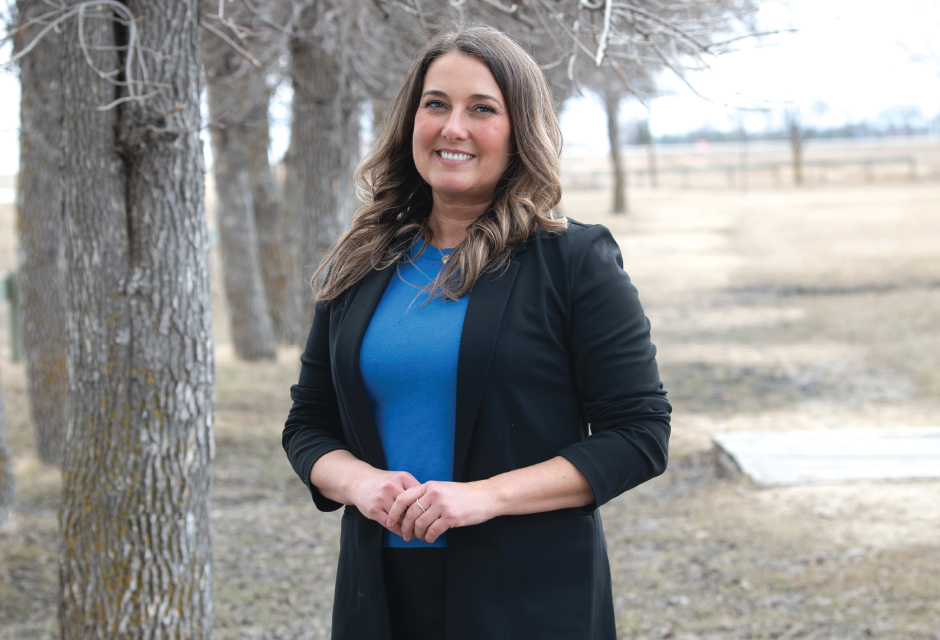
For Julie DeGroot, occupational therapy is all about helping students participate, belong, and thrive. With 15 years’ experience in the field, she works as an occupational therapist with the Interlake School Division, supporting students at all grade levels. DeGroot says her fascination with human anatomy and how the brain works is what drew her to occupational therapy, but her love of kids is what inspired her foray into the school setting.
“To be able to see kids grow and thrive in the school and classroom, to participate and engage, regulate and learn alongside their peers, is wonderful and very rewarding to see,” she said.
DeGroot’s work takes her to seven schools along Highway 6, where no two days look the same. She moves between being in a classroom working with students, collaborating with student support teams, or leading professional development with the professional learning network in her division. “It’s great because it makes the role very interesting and fun,” she said.
Occupational therapy in schools covers a wide range of supports, including building fine motor skills, understanding sensory needs, building independence, and supporting behavioural challenges. “It’s really about having the student at the centre and thinking about things that are meaningful to them, that they want to or need to participate in, and that they might have certain barriers that impact them.”
DeGroot’s job is to help bring down those barriers through supports such as flexible seating in the classroom, fidget tools to help attention, breathing techniques, or movement breaks to support sensory needs. As a self-described ‘lifelong learner’ she’s constantly looking at evidence and best practices to help inform her decisions and work.
A key aspect of her role is supporting mental health and well-being in students. She looks at each student holistically and recognizes that stress, overwhelm or dysregulation can make it difficult to learn and retain information in the classroom. “I think by creating an environment and providing strategies and tools, we can help build the student’s confidence, making them feel included and feel like they can participate and learn in the way that they learn best.”
DeGroot partners closely with teachers, educational assistants, families, and other clinicians for a wraparound approach. Whether she’s co-teaching a lesson, helping design student-specific goals, or connecting with parents, she sees every interaction as part of a larger team effort.
One of the most rewarding parts of her work is when she witnesses meaningful engagement in students, and when their needs and abilities are understood and supported. She often sees kids for several years and observes their growth. “It makes my heart happy that I can contribute in some way.”
DeGroot acknowledges that the main challenge of the job is just time. “There are so many kids that you can work with and reach, but there’s just not enough time to get to everybody.” To address this, Interlake uses a tiered model, supporting classrooms and groups while providing more intensive intervention for students with higher needs.
DeGroot said that when she sees the strategies and results in place, she feels proud, not only of the students, but also the school staff.
“I think of the quote by Dr. Ross Greene that says, ‘Kids do well, if they can.’ And it’s true, because when we really sit back and think about the students and figure out what might be getting in their way and come together and work with them to build that capacity, we see that they want to do well. And that’s the best part of my role is being able to facilitate that and help them thrive.”
The Manitoba Teachers’ Society represents more than 400 school clinicians across the province.