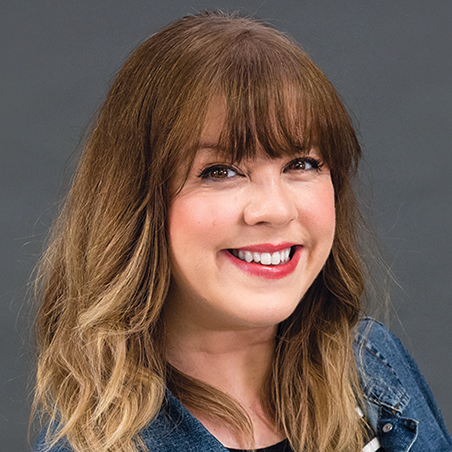
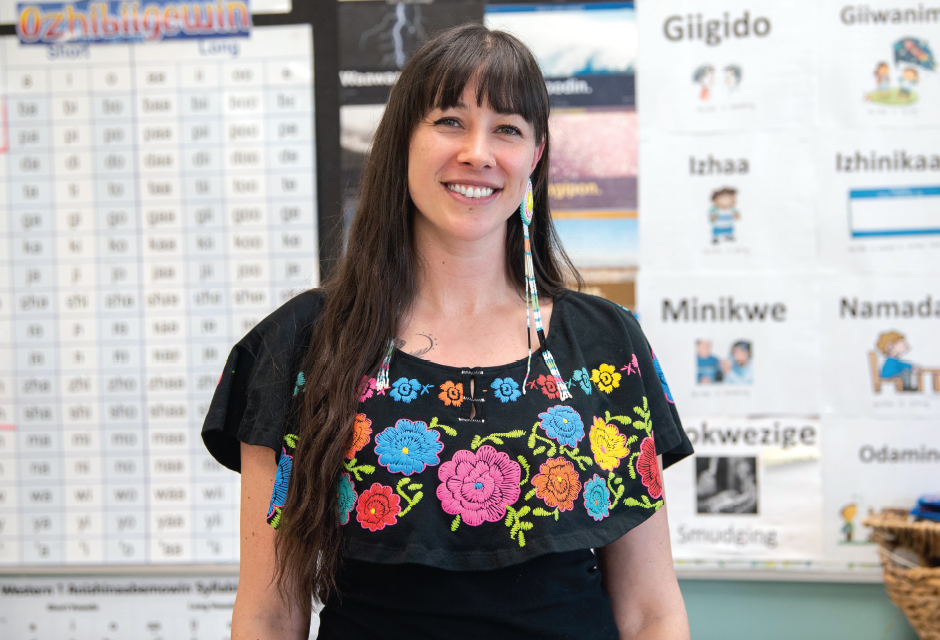
Every morning in Kelsey Halldorson’s Grade 2-3 classroom at Riverbend Gikinoo’amaagewigamig School, students introduce themselves in Ojibwe, sharing who they are, where they are from, their clan, their age, and how they are feeling. For some, it is a connection to a part of themselves they are only beginning to discover.
Halldorson has been teaching in Riverbend’s Ojibwe bilingual program for four years. “The year that I accepted the position was actually the year that my father passed to the spirit world,” she said. “It felt like a really special and meaningful thing for me to do, to come into this program and to teach and learn Ojibwe simultaneously.”
Her father was adopted and grew up disconnected from his Keeseekoowenin roots. Learning the language became Halldorson’s way of honouring him. She started teaching in the program without knowing the language herself, taking Saturday classes with language experts Gloria and Wanda Barker, and leaning on her community at Riverbend for vocabulary support.
Halldorson incorporates the language into as many parts of the curriculum as she can, through reading, writing and singing. She also shares vocabulary lists on a class Instagram account so that the kids can practice at home with their families. All 15 spots are filled, with some families busing in from outside the area. “It’s a rising demand for language,” Halldorson said.
Each school day begins with smudge. This practice is shared across all the Ojibwe program classrooms. While many students are connected to their communities and participate in ceremonies, not all have that opportunity. “…And so, for those kids this is their time of discovery, to really build that confidence about who they are,” said Halldorson.
Singing the Language
Beyond the classroom, Halldorson is in her second year running the school’s Ojibwe choir, Giinawind Riverbend Community School Abinoojiiyag nagamog. Originally founded by Gloria Barker as a group of 10 girls, the choir has grown to more than 30 students from Grades 2 to 5.
In addition to traditional pieces, Halldorson has written six original songs with guitar lines by her husband. One of the most popular is Mino-giizhigan, which translates to ‘Today is a good day’.” Another song was written specifically for Pride. “It’s called apiiteninom – be proud of yourself.” She plans to begin releasing the songs publicly this spring so other educators and speakers can use and learn from them.
Halldorson says that singing is an extremely engaging way to learn language and has been a vital part of her own language learning journey. She sees the same in her students. “They really retain that vocabulary, and you hear them singing it in the halls.”
Last year the choir performed at Festival du Voyageur, Winnipeg Pride, and opened the main stage at the Winnipeg Folk Festival’s 50th anniversary. “The kids are real professionals. You can see the pride that they feel when they’re on stage.”
Halldorson hears positive feedback from parents who are happy to hear their kids speaking Ojibwe at home, and says her kids really enjoy learning it. “For so long, Indigenous children weren’t allowed to speak their language and experience their own culture,” she said. “So now is the time to reclaim that language, to ensure that language is thriving and used and surviving.”
Resources
For anyone interested in learning Ojibwe, Halldorson recommends checking out the Ojibwe dictionary https://ojibwe.lib.umn.edu/. Language classes are available through https://newdirections.mb.ca/service/services/opikihiwawin/